Burnham Open to UK Slavery Apology But Rules Out Reparations Ahead of Commonwealth Summit

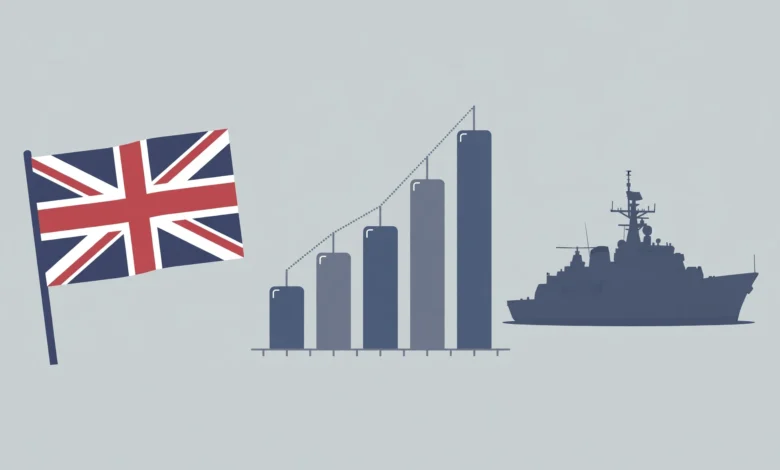
Prime Minister Andy Burnham has said he is open to a formal British apology for the United Kingdom’s role in the transatlantic slave trade, while ruling out financial reparations. He set out the position in an article for The Guardian ahead of the Commonwealth Heads of Government Meeting in Antigua and Barbuda, which runs from 1 to 4 November 2026.
Burnham said Britain was offering a structured dialogue with those affected by the transatlantic slave trade. He wrote that listening to calls for a formal apology on behalf of the British state would form an important part of that process, and that he was open to them.
He also expressed his personal sorrow and regret for the pain and suffering of millions of people. He described the transatlantic slave trade as a brutal and barbaric violation in which people were treated as property and worked to their deaths.
| Detail | What is known |
|---|---|
| Who | Prime Minister Andy Burnham |
| What he said | Open to a formal UK apology for the transatlantic slave trade; financial reparations ruled out |
| Where he said it | In an article for The Guardian |
| Next event | Commonwealth Heads of Government Meeting, Antigua and Barbuda, 1–4 November 2026 |
| Who else is involved | King Charles III, who is touring the Caribbean and will address the summit |
| Alternative offered | A debt-servicing drive to help poorer Commonwealth countries repay over longer periods at better rates |
| Britain’s past position | No formal apology for slavery and no agreement to pay reparations |
Why the apology question has returned now
The timing is tied directly to the Commonwealth summit and to King Charles III’s Caribbean tour. Caribbean leaders have renewed calls for Britain to apologise for selling enslaved people for profit, and for reparations, as the King travelled through the region.
Charles will preside over the summit as head of the Commonwealth, a group of 56 member states, and is due to give the opening address on Tuesday. Reports say his speech is likely to reflect the government’s changed position on the legacy of slavery.
Before the tour, it was understood that ministers had not advised the King to offer an apology or reparations, in keeping with established policy. Burnham’s Guardian article therefore marks a shift in tone, even though it stops short of a formal apology itself.
What Burnham ruled out, and what he offered instead
Burnham was explicit that financial reparations were not the answer. He wrote that he did not think British people today could be held liable for historical wrongs, however heinous, that happened in a different age, under different laws, and in which they played no personal part.
That position matches the stance of his predecessors, who also stopped short of offering reparations. Instead, Burnham said he would seek a drive on debt servicing to help countries repay over a longer period, with better rates.
Chancellor John Healey, Foreign Secretary Ed Miliband and former prime minister Gordon Brown will join him at the summit to help with that work, according to reports of the article. The initiative is aimed at the Commonwealth’s poorest countries, and at easing the burden of debt rather than paying compensation.
How Caribbean leaders and campaigners reacted
Reaction so far has been mixed, with a welcome for the dialogue but no retreat from the demand for reparatory justice. Antigua and Barbuda Prime Minister Gaston Browne welcomed Burnham’s comments and proposals for practical assistance, while adding that the Caribbean’s longstanding position on reparatory justice remained unchanged.
Denis O’Brien, founder of The Repair Campaign, called the statement disappointing and urged the government to give a full and formal apology now. He said such an apology would be a significant and symbolic first step, and that it would not stop the 15 Caricom countries from demanding one.
Sir Hilary Beckles, chair of the Caricom reparations commission, took a different emphasis, saying Burnham was carrying the broad middle of British opinion. He noted that financial reparations did not have to be a stumbling block, because broader issues could occupy the dialogue.
The scale of the history behind the debate
Reuters reports that at least 12.5 million Africans were abducted and sold into slavery in the transatlantic trade. Britain transported an estimated 3.2 million people across the Atlantic, according to the Transatlantic Slave Trade Database cited by Reuters.
Those figures explain why the question is not only about words, but about how Britain reckons with a trade that shaped the Caribbean, Africa and Britain itself. Burnham wrote that he wanted to recognise the way the suffering still shapes the world today.
The debate also sits within a wider transatlantic political moment, from the US approval of 500 Patriot missiles for Ukraine to the Alaska Senate race ahead of the United States election on 3 November 2026. The Commonwealth summit will test whether dialogue can narrow the gap between apology, practical help and the demand for reparations.
Frequently asked questions
Has Britain formally apologised for slavery?
No. Britain has never formally apologised for slavery or agreed to pay reparations, according to reporting of Burnham’s article. Burnham has said he is open to calls for a formal apology, but he has not yet made one.
What exactly did Burnham say about reparations?
He ruled them out. He wrote that financial reparations were not the right answer, and that people today could not be held liable for historical wrongs committed in a different age under different laws.
When and where is the Commonwealth summit?
The Commonwealth Heads of Government Meeting takes place in Antigua and Barbuda from 1 to 4 November 2026. King Charles III will preside over the meeting and give the opening address on Tuesday.
What is Burnham offering instead of reparations?
A structured dialogue with those affected, plus a debt-servicing drive to help poorer Commonwealth countries repay over longer periods at better rates. Former prime minister Gordon Brown is involved in that debt work.
Why are Caribbean countries pressing the issue now?
Caribbean nations renewed their calls for an apology and reparations during King Charles III’s tour of the region, ahead of the summit. They have framed reparatory justice in terms including debt relief, development finance, education, healthcare and climate resilience.